In this essay, I will outline the therapeutic uses of spirit possession (SP) in case studies predominantly from Sudan and Uganda alongside other complementary examples. Firstly, I will outline what SP is and its geographical context. Then I will discuss how SP functions as a therapy including as an expression of distress, living with SP, its capabilities for diagnosis and cures, and its provision of community support. Finally, I will discuss some of the implications of SP as a therapy and conclude with a note for its integration into psychotherapy. A note to the reader: spirit possession (SP) is used interchangeably with both possession trance and non-trance possession.
SP is a widely held and ancient belief that often incorporates contemporary issues regarding physical and mental health and social change (Bourguignon, 2007). A cross-cultural study, by Bourguignon (1976, cited in Cohen, 2008), outlined two major forms of SP: non-trance possession (P) and possession trance (PT). PT is mainly found in sub-Saharan African and, consequently, African communities in the Americas and North Africa.
PT is often purposely induced in ritualistic scenarios and involves a separate entity entering or displacing the host’s identity. Possession is also reported around the world and involves the sudden attainment of a spirit’s powers such as increased knowledge or confidence. Three main forms of ritualistic scenarios incorporating SP include: 1) spirits pressuring hosts to deliver demanded items though harassment or by causing illness, 2) possession by evil spirits which must be exorcised, and 3) spirits providing protection to the host in return for services.
Relief from Oppressive Environments
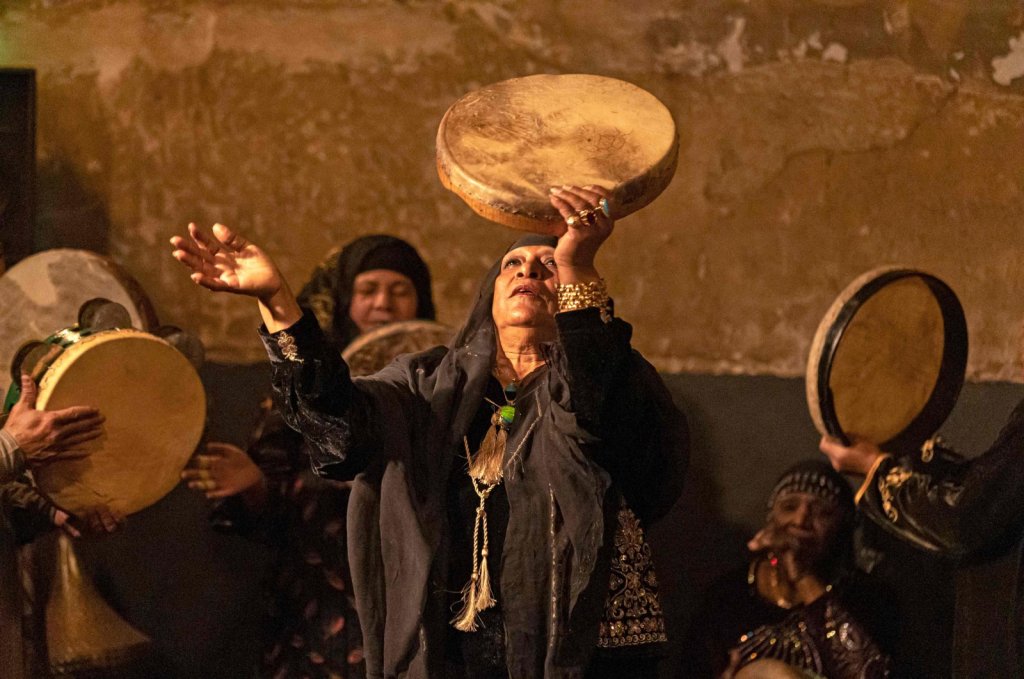
An example of SP’s therapeutic uses in oppressive environments can be found in the Zar Cult through the use of unconscious ‘roleplay’ and expressions of distress. In Sudan, Zar possession is a form of SP that mainly afflicts women of marital status (Boddy, 1988). A study of Zar possession in the village of Hofriyat showed that two-thirds of married women, the majority between 35-55 years old, identified as being possessed. When a woman is under trance, she can communicate with her possessing spirits through dreams and visions whilst externally demonstrating this through observable behaviours. Once a victim is possessed, they remain forever possessed although the spirit does not constantly show itself.
Spirits manifest as many identities including westerners, Christians, and people in positions of power. One spirit, Luliya, is the spirit of a wanton Ethiopian prostitute who demands a bridal shawl, wedding jewellery, and incense. When she appears in ritual, the Hofriyati host is possessed as Luiya, who in turns imitates becoming a Hofriyati bride and feigns a bashful performance of a traditional wedding dance.
Interestingly, there are no Hofriyati spirits, only spirits from non-Hofriyati societies which have had contact with the village in the last 150 years; these foreign identities cultivate unrestrained ‘naf’ or emotion, lust, and desires (Boddy, 1988). Significantly, Hofriyati is a Muslim community with strict gender roles and views on sexuality where women have an inferior social status; female genital mutilation is deemed essential for preventing promiscuity and entering womanhood, polygamy (which may result in intrahousehold conflicts) is common, and women are prevented from having interactions with the world beyond their village (Boddy, 1988; Al-Adawi et al, 2001).
Thus, it can be argued that possession hosts try out what it would be like to be a different type of person, specifically, women displaying culturally unacceptable behaviours or identities in socially acceptable contexts (Boddy, 1988; Al-Adawi, S.H. et al., 2001). This can be thought of as a form of unconscious roleplay. Turner (cited in Boddy, 1988) argues that trance enables the host to grow and be rewarded through antistructure by experiencing new and socially challenging scenarios.
It is argued that trance enables a culturally appropriate ways of changing and challenging emotional patterns and behaviours of the hosts (Boddy, 1988). Moreover, SP allows a wife to make complaints to her husband in a socially acceptable way and gain some short-term stress relief (Grotberg, 1990, cited in Al-Adawi et al, 2001). Therefore, in this context, SP can be therapeutic to women in socially restricting societies (Lewis, 1978, and Constantinides, 1985, as cited in Al-Adawi et al, 2001).
Living with Possession
SP as a therapy can also help patients, and those they interact with, learn to live with certain dissociative symptoms. In the Zar cult, women are never cured of SP resulting in them and other cult members developing long-term relationships with possession spirits (Al-Adawi, S.H. et al., 2001; Boddy, 1988). Additionally, a woman’s husband develops a relationship with her possessing spirit and discusses household issues with it (Boddy, 1988). Therefore, the spirit is not always viewed as a source of distress but an entity that helps resolve conflicts, thus also acting as a therapeutic mechanism for non-host individuals.
Additionally, Corin (1998, cited in Bourguignon) states that SP in the Zebola cult in the Congo also aims to help people live with SP. Here women’s illnesses may be explained due to malevolence of others, such as jealousy, and a cure is sought through PT where a spirit makes demands in exchange for healing. However, unlike the Zar cult where the spirit is appeased, the Zebola cult aims to supress the spirit through trance inhibition. Over several months, post-initiation into the cult, the malevolent spirit is transformed into a benevolent protector and the host learns to live with the spirit in harmony. In this way, SP rituals are shown to help patient’s manage dissociative symptoms in everyday life.
Community Bonding & Support
SP rituals also have a great deal of therapeutic effects through providing community support and strengthening community bonds. During, the Zar rituals, possession may result in interactive and humorous displays resulting in audience laughter (Boddy, 1988). In fact, another name for a Zar ritual is a ‘hafla’ or party, combining elements of satire and comedy) and is described as very enjoyable. Thus, it is argued that possession trance is more than a medical therapy seeking to cure physical and psychological illness within one individual but has therapeutic affects through observing others and experiencing the ritual.
Consequently, its unsurprising that SP rituals results in community bonding where the strict norms on sexuality and gender are broken down (Boddy, 1988). Moreover, Al-Adawi, Martin, & Ghassani (2001) argue that belief in Zar SP for community members struggling to assimilate into the community, enables them to join supportive groups of other hosts and eventually enable integration back into the community.
Additionally, Corin (1998, cited in Bourguignon) states that SP therapy in the Zebola cult also integrates a great deal of community support. Through initiation into the cult and spending time in the healer’s compound amongst other possessed women for several months, members experience a large amount of community support.Gilbert (2024) explains that community membership provides an essential sense of support, wellbeing, and purpose to us as a social species. Individuals with mental health crises may experience isolation and loneliness due to their symptoms, making the need for such support even more important (Gilbert, 2024), which also applies to physical illness. Thus, the aforementioned community benefits of SP enables patients to build a support network which may help alleviate SP patients’ symptoms.
Diagnosis & Cures
Spirit possession also functions as a diagnostic tool, as well as a diagnosis in itself, and can provide short-term and long-term cures. In van Duijl, Kleijn, and de Jong’s (2014) study of Western Ugandan SP patients, they attempted to chronical symptom appearance, steps-taken to seeking help, and outline explanatory models of healing. Typically, prior to possession, patients experienced either traumatic events like a child’s death or physical symptoms such as ulcers and fevers. These then developed into sensory-motor symptoms such as fainting and dissociative symptoms such as seizures and mutism.
During traditional healing sessions, which community members and relatives often observed, dancing, singing and praying were used to request the spirits to manifest themselves (commonly as demi-gods, ancestral spirits, and messengers) (van Duijl1 et al., 2014). Sprits communicated their wishes through the patient through bodily twitching, speaking through a ‘spirit’s voice’, or changing consciousness states rather than through involuntary means such as dreams, sensory-motor experiences, or auditory hallucinations.
Unlike Zar possession, the reasons for SP were not dependent on demographic factors like sex or age. The main causes of SP were described as grief, land conflicts, jealousy, neglect of responsibilities, and most commonly, ritual neglect. Healers would then negotiate with the spirits and the patient would make promises to alter certain behaviours or take up traditional healing themselves, sometimes the spirits would provide forgiveness for certain behaviours, or patients would be given herbal medicine as a form or protection against spirits.
Although this does not tackle physical symptoms directly, it does tackle psychological and social causes. For traditional healers in African settings, dissociation is often seen as a form of spirit possession (van Duijl1, Kleijn, de Jong, 2014). Spirit possessed patients reported higher levels of dissociative symptoms and traumatising life events, than controls which highlights the link between dissociation and traumatic stress (van Duijl1, Kleijn, de Jong, 2014).
Dissociative disorders, such as dissociative identity disorder (DID) or dissociative amnesia, are the brain’s way of dealing with too much stress and often follow a traumatic life event (Dissociative Disorders, 2021). The NHS recommends talking therapies for dissociative disorders and may proscribe certain medications. Similarly, SP may result in the spirit talking out certain social issues such as jealousy or guilt in cultures where these may be taboo or not as easily expressed. Resolutions and cures can then be presented based on these diagnoses.
The provision of a diagnosis, especially in cases where alternative medical interventions have failed, is a considerable factor in SP’s therapeutic qualities. Of the patients studied, 66% sought help from western medical health services before approaching healers when such interventions were unsuccessful. Patients that experienced traditional healing, 54% believed they were healed and 45% reported feeling considerably better. An explanation for this is that SP provides patients the means to attribute meaning to their traumatic stress and explain it through cultural models.
Arguably, the success of these healing rituals can be attributed to the sessions causing changes or a complete transformation in the patient’s view of themselves, social relationships, or bodily experiences. Unlike Western medicine, which addresses traumatic stress through discovering and analysing it in a ‘trauma-focused therapy’ and has been found to not always be necessary, most cases of traditional healing did not directly address traumatic events as part of their healing methods (van Duijl1, Kleijn, de Jong, 2014).
SP in the Zar cult is also described as therapeutic and women often say they feel better after a trance; they explain this as spirits restoring their health as a reward for going into possession trance (Boddy, 1988). This is explained that the prevention of relapse occurs through the initiation into the Zar cult with the availability of community support, although a ‘cure’ to possession is not possible. Kapferer (1986, cited in Boddy, 1988) argues that self-reflection is another therapeutic benefit, which can occur after SP by remembering the experience. However, SP’s outcomes are not objectively measurable, and many discredit any introspective capabilities, despite some advocating for SP as a form of psychotherapy (Bourguignon, 1979 & Kennedy, 1967, cited in Boddy, 1988).
Therapeutic Implications
SP as a therapy holds implications for western treatments of dissociative disorders. DID is treated, alongside other therapies, through the attempt to merge the split-off personality with the rest; this is different to SP therapy where different identities in trance are considered alternative entities (spirits) separate from the host’s self and sought to be appeased, inhibited or exocised (Bourguignon, 2007). Additionally, some individuals with DID can find dissociation a comforting experience and may not be ready to try stop it (Dissociation and dissociative disorders, 2023). Therefore, I believe western therapies should take this into consideration when treating patients from backgrounds with beliefs in SP; treatment should consider if the pacient views the other identity as foreign or a part of themselves and, if foreign, should consider treatments involving harmonious living with the other identity rather than integrating them.
There are several negative factors of SP to be considered when analysing SP’s therapeutic benefits. Firstly, diagnosis may result in individual community members being blamed for inflicting illness, like in the Zebola cult, which can have negative consequences for social relationships (Corin, 1998, cited in Bourguignon, 2007). Secondly, treatment involving appeasing spirits could result in economic harm; in the Zar cult, a spirit’s demands for expensive gifts may prevent a man marrying another wife (Boddy, 1998; Al-Adawi, S.H. et al., 2001).
These negative attributes, alongside others, could be avoided though alternative therapies. Therefore, spirit possession should be approached cautiously as a means of therapy and would be most useful in cases of encouraging patients to engage in talking therapy (which also engage their other identities) and role-playing as desirable identities which could mitigate the need to try out more liberating identities unconsciously. Other useful areas of SP include giving gifts to oneself and ‘cleansing’ oneself of negative energy through positivity or good deeds.
Conclusion
In conclusion, in countries and settings with low-resources and limited access to western psychological services, traditional healers play a large role in addressing distress amongst community members. Thus, it can be shown that SP is extremely useful in these contexts for managing mental health disorders and other forms of manifesting distress. SP can provide a faster, more cost effective, and, in some cases, more effective alternative to western medication and therapies (van Duijl et al., 2014). De jong (2014) argues that for mental health services in low and middle incomes countries to be improved, further research should be conducted into dissociative states as a result of traumatic stress, as well as the effectiveness of western medicinal and traditional healer collaboration. Specifically, after traumatic events, mental health services should focus on providing spiritual resources and strengthening social structures rather than focusing on patients uncovering and reliving trauma which may not be necessary.
SP also poses the idea to involve relevant community members within patient therapy. For example, if a patient is religious, a trusted member of their religious community could support the patient during therapy sessions and consider discussing healing within that religion e.g. prayer, rituals, and offerings.
Additionally, SP religions have been observed globally as mostly involving women (Bourguignon, 2004). It has been argued that this is due to women’s inferior social status and subordination in many societies who are more susceptible to possession and use it as a way of expressing distress (Boddy, 1988; Bourguignon, 2004). However, little research has been conducted into why men do not take advantage of SP as a therapy. A study has shown that African men have internalised masculine norms that have resulted in mental health issues (Ezeugwu & Ojedokun, 2020). However, due to men restricting their emotive expression due to institutionalised beliefs (Ezeugwu & Ojedokun, 2020), I argue men are prevented from using SP as therapy in many contexts.
In Hofriyati society, both sexes are expected to maintain emotional control and dignity which makes expressions of emotion taboo (Boddy, 1988). Hofriyati men will not seek Zar mediums even when alternatives medicines fail although women will continue to Zar possession rituals (Boddy, 1988). Consequently, I suggest that SP is less likely to occur in men due to their culturally ingrained resistance to expressing emotion and would unlikely to be supported by the community if they became possessed.
I argue that cultural symptoms of SP are less likely to be diagnosed in men due to gendered beliefs regarding socially acceptable emotional expressions and spirit susceptibility. Therefore, I argue SP is less likely to be of therapeutic use to men although SP’s methods like talking therapies and roleplay, or calling in alternative identities, could be useful in western therapy sessions without the SP label.
References
Al-Adawi, S.H. et al. (2001) ‘Zar: Group Distress and healing’, Mental Health, Religion & Culture, 4(1), pp. 47–61. doi:10.1080/13674670124303.
Boddy, J. (1988) ‘Spirits and selves in Northern Sudan: The Cultural Therapeutics of Possession and trance’, American Ethnologist, 15(1), pp. 4–27. doi:10.1525/ae.1988.15.1.02a00020.
Bourguignon, E. (2004) ‘Suffering and healing, subordination and Power: Women and Possession Trance’, Ethos, 32(4), pp. 557–574. doi:10.1525/eth.2004.32.4.557.
Bourguignon, E. (2005) ‘Spirit Possession’, in C. Casey and R. Edgerton (eds.) A Companion to Psychological Anthropology: Modernity and Psychocultural Change. Oxford: Blackwell Publishing Ltd, pp. 374–388. Available at: https://onlinelibrary.wiley.com/doi/book/10.1002/9780470996409 (Accessed: April 2024).
Cohen, E. (2008) ‘What is spirit possession? defining, comparing, and explaining two possession forms’, Ethnos, 73(1), pp. 101–126. doi:10.1080/00141840801927558.
Dissociation and dissociative disorders (2023) Mind. Available at: https://www.mind.org.uk/information-support/types-of-mental-health-problems/dissociation-and-dissociative-disorders/treatments-for-dissociative-disorders/?gad_source=1&gclid=Cj0KCQjwlZixBhCoARIsAIC745DKKXEoa5Ls7l5Mz47Aafb0Uuui4AkrPxuCo-YrVfOPecsZ00rzaqMaApt9EALw_wcB (Accessed: April 2024).
Dissociative disorders (2021) NHS. Available at: https://www.nhs.uk/mental-health/conditions/dissociative-disorders/ (Accessed: 22 April 2024).
Ezeugwu, C.R. and Ojedokun, O. (2020) ‘Masculine norms and mental health of African men: What can psychology do?’, Heliyon, 6(12). doi:10.1016/j.heliyon.2020.e05650.
Gilbert, S. (2024) The Importance of Community and Mental Health, NAMI. Available at: https://www.nami.org/family-member-caregivers/the-importance-of-community-and-mental-health/#:~:text=Having%20people%20you%20can%20call,benefit%20your%20outlook%20on%20life.&text=In%20community%2C%20people%20fill%20different%20roles. (Accessed: April 2024).
van Duijl, M., Nijenhuis, E., Komproe, H., Gernaat, H., and de Jong, J. (2010) ‘Dissociative symptoms and reported trauma among patients with spirit possession and matched healthy controls in Uganda’, Culture, Medicine, and Psychiatry, 34(2), pp. 380–400. doi:10.1007/s11013-010-9171-1.
van Duijl, M., Kleijn, W. and de Jong, J. (2014) ‘Unravelling the spirits’ message: A study of help-seeking steps and explanatory models among patients suffering from spirit possession in Uganda’, International Journal of Mental Health Systems, 8(1). doi:10.1186/1752-4458-8-24.
 Waygaze
Leave a comment