Policy Pointers
- The GGW needs enhanced long-term strategies as evaluations reveal unsatisfactory ratings of overall, long-term sustainability, attributed to insufficient community engagement, project coordination, policy issues, and conflicts.
- Mainstreaming political frameworks ensures policy coherence, preventing overlaps and smoother project implementation. Merging small-scale GGW & non-partner projects reduces funding costs
- GGW Countries must increase community engagement, specifically regarding gender equality and pastoralist groups, and sustaining community interest for long-term success.
- Conflict-affected GGW Countries should implement targeted strategies for biodiversity restoration and water conservation, ensuring long-term affects beyond possible project abandonment
Summary
The GGW is a UN project implemented in 2007 which aims to halt desertification in the African Sahel by creating a ‘green wall’ against the Saharah desert. Expected benefits include land restoration, employment, carbon capture, and increased biodiversity. However, recent evaluations show that long-term sustainability and country benefits are unsatisfactory, attributed to insufficient community engagement, project coordination, policy issues, and conflicts. This brief proposes: mandatory mainstreaming of GGW national political frameworks, merging small-scale GGW & non-partner projects, increasing community engagement (focusing on gender equality and pastoralist groups), and targeted strategies for conflict affected GGW Countries in case of abandonment. These strategies should support smoother project implementation, greater community investment in GGW projects, and a higher likelihood of long-term success.
Policy
The Great Green Wall
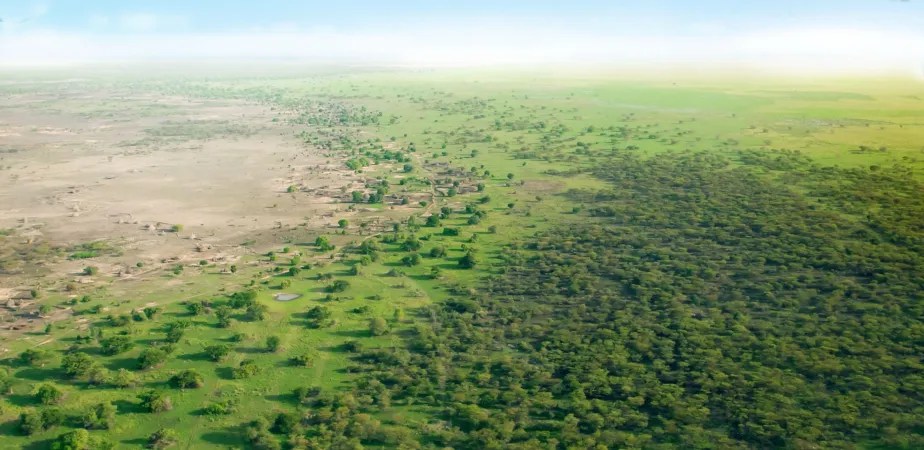
The Great Green Wall (GGW) is a reforestation project proposed in 2007 by the African Union and aims to restore 7,500km of land, 15km wide, in the Sahel region in Africa by 2030.[i] Its purpose is to halt desertification, food insecurity and biodiversity loss whilst focusing on native species regeneration and water conservation. The scheme involves passing through eleven countries and aims to restore 100 million ha of degraded land, sequester 250MTc, and create 10 million jobs. The UN, World Bank, and EU fund the GGW alongside other public, private, and non-governmental sources.
The Sahel experiences vegetation loss, soil degradation, and desertification through practices of unsustainable land management (like livestock grazing), recurrent drought. Land Degradation is defined as “the reduction or loss of biological or economic productivity and complexity of land”. The Sahel is one of the most degraded and desertified land areas in the world despite 135 million people depend on it.
The GGW uses a variety of Sustainable Land Management (SLM) techniques across the 11 involved countries, including watershed and forest management, reforestation, and assisted natural regeneration. By 2020, the scheme had created 335,000 jobs and restored 20 million ha of land with US$2.5 billion dollars. However, only 4-16% of the UN GGW land restoration goals had been fulfilled. The GGW has since devolved from an reforestation scheme into multiple projects which range from creating community gardens to protecting forests.[ii] Due to waning interest, the GGW Accelerator (GGW-A) was proposed in 2021 and provides a five-year economic boost of $14 billion.[iii] The policy will be implemented by the Pan African Agency of the GGW (PAA-GGW) and aims to improve policy and governance frameworks, coordination and collaboration with relevant stakeholders, and improve progress monitoring .
Policy Proposal
Given the international and national scale challenges in addition to the GGW-A’s recent proposals, policy reframing is imperative. The current pace of GGW activities falls short of the 2030 target and key limitations include insufficient information flow, coordination, implementation processes, and policy mainstreaming.1,3 Improvement is needed in long-term strategy implementation. An overall ‘Highly Unsatisfactory’ rating was given to ‘Overall Sustainability’ including unsatisfactory ratings of: Maintaining Accelerator Outcomes After Project Closure, Transition of Activities into the PAA, Long-term benefits to participating countries, and Sustainable Support from International Partners for GGW.[i] This I propose rejuvenating GGW efforts prioritising long-term solutions in conflict regions, community engagement, effective financing, and policy mainstreaming.
Mainstreaming
Political Frameworks
Another issue is the lack of mainstreaming, coordination, and monitoring, which has been reported by most GGW countries as being the main limiting factor to successful GGW implementation.1 A lack of mainstreaming of policies, environmental management practices, and programmes into sector strategies was found. This is an issue as governmental-level support is essential through policy integration in GGW relevant sectors like Agriculture and land use. A lack of information sharing and coordination between GGW structures which leads to a lack of coordination between national-level projects and between GGW countries.
Nine GGW countries (excluding Eritrea, Senegal, and Ethiopia) reported governance and institutional problems and three countries (Mali, Niger, Mauritania) reported issues with reporting and monitoring. In Sudan, it has been expressed that land management related governmental mandates at national and state-levels need further clarification due to multiple overlaps.[i] Despite the presence of a Sundanese Higher Council coordinating the ministries, a lack of clarity is still present which affects the effectiveness of GGW project implementation.
As mentioned, despite mainstreaming being essential for successful project implementation, Only Senegal, and Mali, of the eleven GGW countries, have created a GGW national political framework, governed by the Prime minister’s Office, and being supported by the GGW-A.[ii] This results in state funding to be distributed across municipal, district, and national levels, a greater focus on local-level monitoring, and greater policy coherence between overlapping mandates. I propose that all countries must mainstream a national political framework for the GGW and make it a requirement for GGW funding eligibility. Additionally, I suggest that complementary secondary councils be created specifically for addressing policy overlaps at regional and local levels in relation to national-level policies. These councils would be able to address small-scale policy issues quickly specifically between small-scale stakeholders and have the power to overrule and solve problematic policy areas.
Project Merging
Since the GGW’s start, it has devolved from a huge reforestation scheme into many smaller projects. In addition to GGW projects, involved countries also have many other environmental and social projects occurring that may share intended outcomes to the GGW. These may be funded by international, state, or NGO organisations and due to the aforementioned problems regarding information sharing, may not be known to national GGW Agencies.
In Ethiopia, a reported lack of awareness of GGW activities and national project information sharing was reported; it was suggested that the GGW should collaborate with other climate change organisations to address this disconnect.[i] In Mali, a lack of communication between GGW and land restoration projects has resulted in the Agency being unaware of small donor projects being implemented in GGW areas linked to SLM and livelihoods.6
This is advantageous to funding purposes and information sharing only if these smaller projects are merged as larger projects are more readily funded than many smaller ones.1 Due to all GGW countries presenting financing as a key contributing limitation to GGW project success, I suggest that merging of smaller GGW projects in addition to non-GGW projects should be implemented as another step to gaining further funding and scaling up projects.
Community Engagement
Community engagement is essential to GGW projects’ long-term success, and can only be achieved by empowering and educating community members to perform and sustain land restoration activities.1, [i] Nevertheless, GGW projects are not fully capitalising on the potential benefits of local communities. Many GGW countries have experienced challenges scaling up projects due to inequalities.
Gender
Gender inequality in GGW countries presents a limitation to scaling up GGW projects.8 Care-WWF Alliance’s research has shown a correlation between lower levels of a country’s environmental wellbeing and higher levels of gender inequality.[ii]
Research has also shown that empowering women within the conservation sector, can reduce environmental damage. Gender inequality regarding land rights and gender roles, particularly in rural areas, is prevalent within socio-cultural norms.5, 6 In Sudan, women only gain secondary access to land through status as mothers, wives, and daughters.8
However, many GGW countries having gender policies aiming to increase social inclusion, resource access, and economic equality. Senegal’s ‘National Gender Equality and Equity Strategy 2005-2015’ improves women’s access to decision-making spheres and economic status. Additionally, most of Mali’s fundamental policies include Gender Equity considerations, increasing access to assets that can improve livelihoods.
However, despite equality existing in policy design, it is not always present in GGW practice and equality issues are often addressed through narrow economic solutions.5,6 Poverty eradication, especially regarding vulnerable groups such as women and pastoralists, requires land right security.8
There are two ways of improving gender equality; firstly, through the provision of equal access to resources, tools, and knowledge; and secondly, educating and gaining men’s support for gender equality.[iii] The GGW-A recommends ensuring equal participation in management and restoration projects and nurturing leadership and technical skills to empower women.8 However, I propose a renewed focus in providing women access to property and income control. Women can gain bargaining power and livelihood opportunities through the provision of assets and constraints on this is a significant cause of inequality.10
I suggest providing women’s-only community gardens to increase livelihood opportunities and income. Community gardens are already in use but making them women’s only is a new addition. Additionally, I suggest supporting women in the establishment of women’s cooperative’s which will enable women to save money and invest outside household constraints.
However, improvement in economic opportunities in developing countries does not address often unequal inheritance laws and social conventions.10 Alongside legislative reform of women’s property rights its essential that gender equality education be provided to communities during GGW projects.
Pastoralists
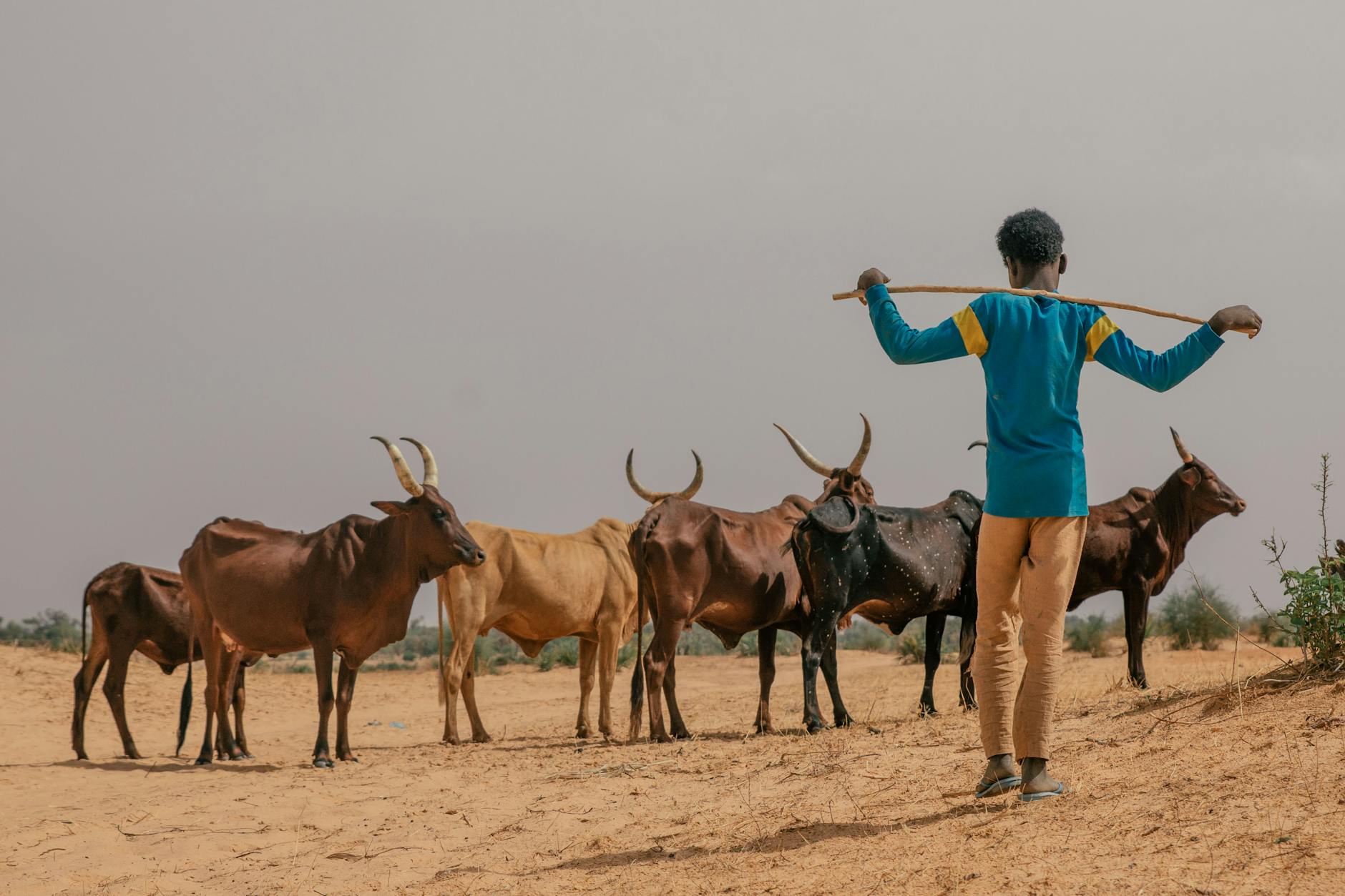
A lack of involvement of local communities is believed to be limiting factor of the GGW initiative in some countries; primary actors are often excluded from GGW projects like pastoralists and farmers.8 An analysis in Senegal and Mali revealed that non-state stakeholders were excluded through implementation of GGW activities through a top-down approach. GGW land areas in Senegal, form part of pastoralist lands and requires herders’ greater involvement in decision-making. Their marginalisation makes the need for community capacity building particularly significant. Senegal is using natural regeneration to retore land to its natural state; natural regeneration involves fencing off land to prevent human interference to enable plants to grow back naturally.[i] This forces migrating herders to navigate around plots and seek decreasing grazing land further afield. However, in one location, herders were able to pay a small fee to feed their livestock from a controlled harvest.
I propose that natural regeneration and controlled cutting also occur in other pastoralist land areas within the GGW scheme including Senegal, Kenya, Ethiopia, the Ethiopia-Djibouti border, Somalia and Afar regions. However, GGW funding should support this practice rather than fees to prevent further impoverishing pastoralists. Moreover, an Agro-silvo-pastoral productivity and degraded land project in Burkina Faso is expected to gain 350,000 beneficiaries and restore 30,000 ha of land.1 This project Providing pastoralists with similar opportunities across GGW countries to diversify their livelihoods would make them more adaptable to climate change effects and benefit GGW goals.
Conflict – Long-term Strategies
Long-term benefits are also hindered by unstable national security which turns away investors.1 The majority of GGW countries have been evaluated as having high-to-severe political and country risks. Countries with lower risk gain better investment such as Senegal, Ethiopia, Niger, and Eritrea than those with high risk, like Mali, Burkina Faso, Sudan and Niger which have experienced armed conflicts.2 In Mali, GGW projects are constrained by armed militia in the North and project funding in Sudan has been suspended due to security instability.5,6 In Ethiopia, an economic reform agenda, aiming to provide long-term climate change strategies, has some plans prevented due to conflicts.[ii] These conflicts cause increases in funding expenditure due to the economic costs that come with war, migration, and civil conflict.1
GGW projects need to consider current and predicted future conflict effects more thoroughly and focus on strategies that could continue without human intervention over long periods. Therefore, highly managed community gardens, agriculture plots, or planting trees that require lots of water are not suitable; instead, the main focus should be on increasing biodiversity, water conservation, and soil fertility.
The Zaï technique increases soil fertility and water retention by digging pits to collect water from the rainy season.1 This restores degraded lands and has been successful for Burkino Faso farmers to increase crop yields. Additionally, GGW projects should use more affective and long-term soil conversion techniques.[iii] Liquid nano clay (sand particles coated in clay) has been successful in the UAE and enables 50% more absorption of water with lasting affects for five years. The Zai technique and soil conversion are used in some Sahelian countries, however, they should be specifically used and adapted for areas of predicted conflicts to restore degraded land for longer time-periods without human intervention. Natural regeneration is ideal, but community gardens could also be used. These should be areas that could grow back when people abandon the area.
Additionally, these may need stronger incentives for community engagement. Projects in high-risk areas should focus on giving communities transportable assets (like small livestock) and skills (like basket making) in case of migration. Additionally, work permits to other intra-national GGW projects (if one needs abandoned) can also act as a measure of livelihood security.
References
[1] United Nations (2021). The Great Green Wall Implementation Status and Way Ahead To 2030. Available at: https://catalogue.unccd.int/1551_GGW_Report_ENG_Final_040920.pdf
[1] Is Africa’s Great Green Wall Project Withering? (2023) Nature News. Available at: https://www.nature.com/articles/d41586-023-01293-6 (Accessed: 29 March 2024).
[1] Green wall accelerator (2021) UNCCD. Available at: https://www.unccd.int/our-work/ggwi/great-green-wall-accelerator (Accessed: April 2024).
[1] Todd (2023) Independent Review of the Great Green Wall Accelerator: Final Report February 2023 UNCCD
[1] Ganawa, ES. 2022. The Great Green Wall Initiative in Sudan Country Review. Bogor, Indonesia: Centre for International Forestry Research (CIFOR) and Nairobi: World Agroforestry (ICRAF).
[1] Mentz, S. and Karambiri, M. 2022. The Great Green Wall Initiative in Mali Country Review. Bogor, Indonesia: Centre for International Forestry Research (CIFOR) and Nairobi: World Agroforestry (ICRAF).
[1] AgriBilcha PLC. 2022. The Great Green Wall Initiative in Ethiopia Country Review. Bogor, Indonesia: Centre for International Forestry Research (CIFOR) and Nairobi: World Agroforestry (ICRAF).
[1] Bernard, F. 2022. Regional Policy Coherence Analysis to Scale Up Action and Achievements of the Great Green Wall Initiative. Bogor, Indonesia: Centre for International Forestry Research (CIFOR) and Nairobi: World Agroforestry (ICRAF)
[1] How gender equality impacts conservation | stories | WWF (2022) WWF. Available at: https://www.worldwildlife.org/stories/how-gender-equality-impacts-conservation (Accessed: April 2024).
[1] Goyal, A. (2012) Importance of equal inheritance rights for female empowerment, World Bank Blogs. Available at: https://blogs.worldbank.org/en/developmenttalk/importance-of-equal-inheritance-rights-for-female-empowerment (Accessed: April 2024).
[1] Rouse, L. (2018) Remedies and roadblocks as Senegal battles climate change, The New Humanitarian. Available at: https://www.thenewhumanitarian.org/special-report/2018/10/25/remedies-and-roadblocks-senegal-battles-climate-change (Accessed: 02 April 2024).
[1] AgriBilcha PLC. 2022. Analysis of policies relevant to the Great Green Wall Initiative in Ethiopia. Bogor, Indonesia: Centre for International Forestry Research (CIFOR) and Nairobi: World Agroforestry (ICRAF).
[1] Blilou, I. and Hirt, H. (2022) ‘Desert plants to stop desertification’, EMBO reports, 24(2). doi:10.15252/embr.202256687.
 Waygaze
Leave a comment